


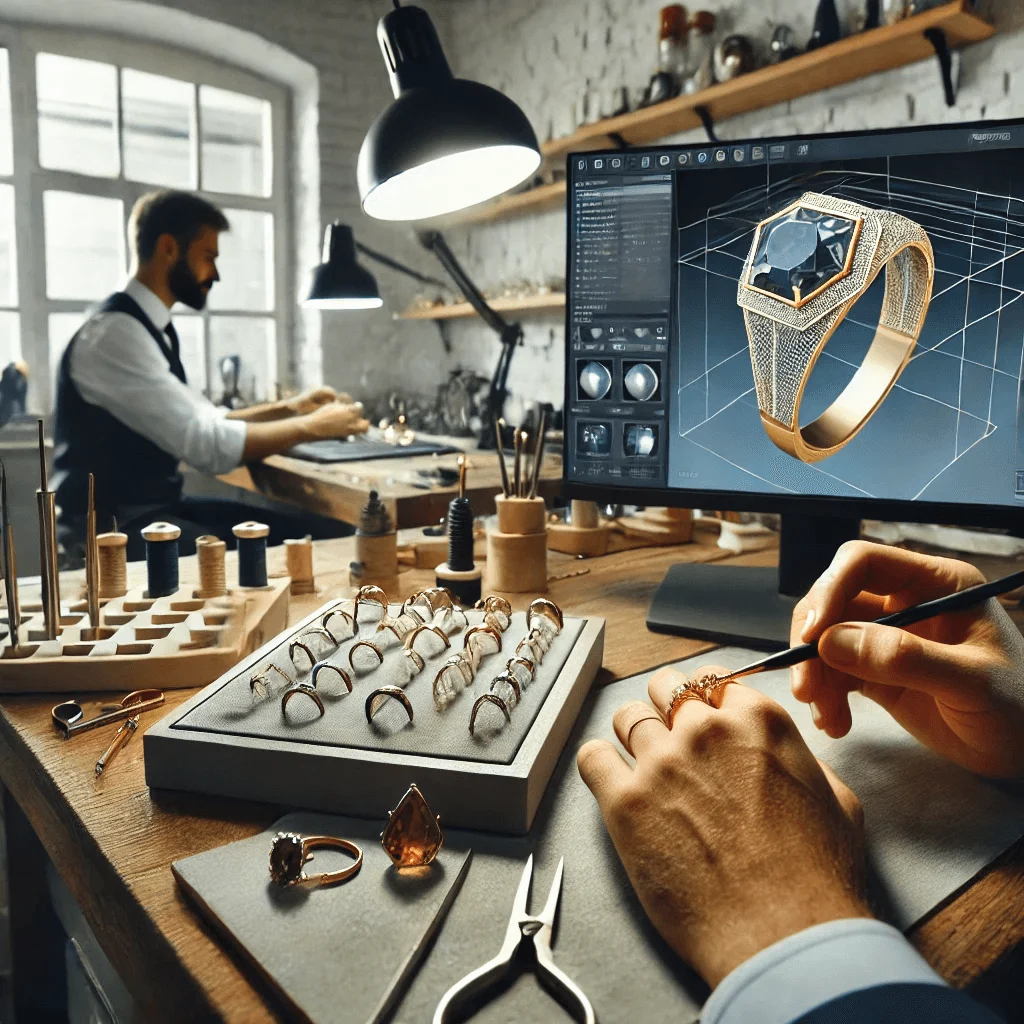
Prototyping is one of the most crucial parts of custom jewelry manufacture since it’s a chance to test a design before committing to higher production numbers.
A digital design could seem wonderful on screen but when it’s turned to a tangible product it might feel different. The sample enables companies to assess size, weight, proportion, comfort, stone setting, polish and structural integrity. More sample rounds may take more time but can help avoid bigger, more costly production problems.
Scalability is becoming more and more vital as the demand increases. Ideally, Jewelry Manufacturers in USA would be able to expand output without compromising the level of quality.
Partnering with a USA manufacturer Communication and Compliance
Quality control doesn’t stop with sample approval. The producer must produce in accordance with the accepted specification. This comprises quality of materials, size, stone arrangement, finish, assembly and overall look.
Inspections must be uniform . When you manufacture in huge volumes . Each unit shall be up to the requirements stated at the time of sampling. A good quality control method may help to prevent flaws and maintain the brand’s reputation.
Brands should also explain how faulty items will be managed. Preparation of inspection and rectification processes in advance may improve the transparency of the production connection. And think about compliance and product criteria as well. Jewelry companies should be aware of the legislation and standards that apply to their goods and to the market they are targeting. Make proper handling of the material claims, labeling, consumer safety standards and other associated duties.
As a brand grows, its production needs may change. New designs may demand other procedures, greater numbers may become required and buyers may seek more personalization. A flexible manufacturing partner may help with these adjustments.
Understanding the Custom Jewelry Production Process
Long term cooperation may also lead to more efficiency. Once the manufacturer has a clear understanding of the design style, material, quality, finishing preferences and manufacturing methods of the brand, the subsequent projects could go a little smoother.
Businesses should still consider the cooperation nonetheless. Product quality, delivery performance, communication, price, manufacturing capacity and response should be constant throughout time.
Custom production allows you to explore further with these features. Brands might ask for particular sizes, one-of-a-kind silhouettes, customized components, trademark textures or bespoke finishes not accessible via typical wholesale selections.
But pragmatism should be matched with inventiveness. A design has to be pleasant to wear, structurally solid, relatively manufacturable and appropriate to the price range planned. Working with a knowledgeable manufacturer may assist uncover technological limits while still maintaining the original artistic vision.
Materials, Gemstones And Finishes Selection
The approach starts with a thorough grasp of the brand’s identity and target consumer. Then it goes through design development, material selection, prototype, sampling, manufacturing, finishing, quality check and delivery. Each step adds to the quality and financial viability of the final collection. 3D modeling may assist you envision the product at multiple perspectives and discover any production concerns. At this point you may also find difficulties with proportions, structural strength, stone placement or component thickness.
Another crucial factor is the finish. Polished surfaces take on a distinct look than matte, brushed, hammered, textured, oxidized or plated finishes. A simple modification in the finish of a product may dramatically impact customers’ perception of it. The sample might potentially indicate problems with production. Maybe a part is too thin, or a setting needs to be beefed up, or a certain finish doesn’t look how it was supposed to. Usually, it is quicker and cheaper to deal with these problems at the sample stage than to fix them after mass production.
Depending on the intricacy of the product, the number of sample rounds might be a few. Improving quality control process via documentation. For production purposes, objective standards may be set by submission of approved samples, technical drawings, material specifications and finishing references.
An achievable timeframe assists companies in better aligning product releases and marketing efforts. It is typically best to engage with a manufacturer that can provide you a realistic delivery timetable as opposed to one who claims very speedy production no matter how hard the project is.
Scalability should be explored as well. A successful collection might result in a sudden surge in demand and ideally the producer should have the ability to boost production without sacrificing quality.
Therefore, brands should take present and future needs into account when choosing a manufacturing partner. A manufacturer that can handle expansion offers a lot more stability as the firm grows.
Selecting The Right USA Jewelry Manufacturing Partner
The objective should be to build a repeatable production process, not to depend on human skill. This is more critical when a brand grows and the quantities of manufacturing rise.
Also, minimum order quantities are vital to consider. Sometimes manufacturers will have minimum quantities that must be purchased because of the necessity for a manufacturing run or material purchase. New brands may want smaller first runs to test out client reaction, established companies may require higher numbers to satisfy demand.
Industry Experience & Manufacturing Experience
One of the first things to consider is the expertise of the maker in the jewelry sector. An experienced maker will be more likely to grasp the technical needs for various kinds of jewelry, materials, techniques of manufacturing and finishing procedures.
But experience has to be measured by relevance not just by the amount of years a firm has been in business. For example, a manufacturer may have a lot of expertise making basic fashion jewelry but have little experience making more complex bespoke pieces or gemstone items. Brands should therefore assess the skills of the producer against their own special needs. Production timeframes should be properly considered also. A manufacturer that knows your kind of jewelry is more likely to identify technical problems and provide suitable solutions throughout the design development stage.
Communication should be addressed from the outset as well. A good partner will answer questions clearly, offer meaningful feedback, record requirements and communicate quickly when difficulties occur.
Summary
A good manufacturing partner can assist take concepts through to completed jewelry, keeping standards constant throughout the manufacturing process.
The jewelry industry is very competitive and product quality and distinctiveness are becoming more and more crucial. Jewelry Manufacturers in USA require goods that not only look good, but items that exceed client expectations in terms of durability, quality, comfort and consistency. Finding a manufacturer who can satisfy these needs is a matter of rigorous study and not just the lowest quote.
