


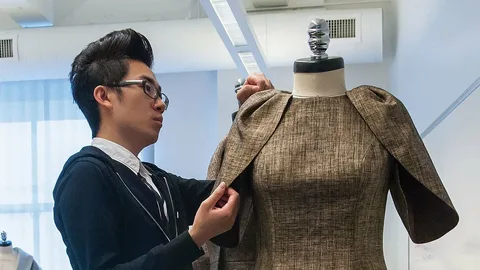
Future designers should learn the basics of fashion first before constructing complex collections. Having a solid foundation allows the students to learn how all the elements work together to make a balanced, attractive garment. Color, proportion, texture, line, form, silhouette and composition are some of the basic ideas affecting fashion design.
Fashion education imparts these ideas to students via academic and practical study. Students may experiment with visual compositions, explore color combinations, learn about various shapes and comprehend garment measurements. These basics assist kids to grow out of just mimicking trends and inspire them to come up with fresh thoughts.
Students are also taught garment construction and pattern creation. The first step in the design process is a creative drawing. The designer has to know how the garment is going to be created, how the patterns are going to be generated, how the measurements are going to be applied and how the final outfit is going to fit on the user.
Aspiring designers may learn these basic approaches to gain more confidence. They may know the technical fashion designing course in Jaipur behind their designs and articulate their notions better, instead of waiting for others to implement their ideas.
Transform Creative Ideas Into Practical Designs
Fashion is about creativity, but becoming a professional designer is more than just having great ideas. Designers need to be able to turn such thoughts into real clothes and collections. This is when hands-on learning really comes in handy.
Students may investigate and find inspiration first, then they can create mood boards, color palettes, fabric choices, drawings and design ideas. These steps assist to turn an abstract notion into an organized creative direction. As the students work on various projects, they learn to sharpen their notions and bring them into a more pragmatic realm.
Fashion illustration may be a significant part of this process. Sketching is a way for designers to convey shapes, dimensions, garment details, colors and styling suggestions. Regular drawing practice helps pupils to communicate their concepts more clearly and acquire a better visual language. These experiences can build up technical knowledge and creative confidence over time.
Discover Jaipur’s Fashion & Cultural Heritage
Then pattern making and garment manufacturing allowed those ideas to take tangible form. Students get the opportunity to experiment with cuts, seams, drapes, pleats, gathers, panels, and other structural elements. When you are working right with fabrics, you learn how materials respond to various techniques.
Traditional patterns, architectural elements, handmade textiles, regional colors and artisanal processes may all be a starting point for modern design concepts. Students may learn to look at the cultural elements and reinterpret them with a contemporary day fashion viewpoint.
Traditional textile processes may also teach pupils the value of workmanship. Handmade technique. Patience, accuracy and a keen eye for detail are all part of it. Understanding these attributes might inspire budding designers to appreciate the amount of labor that goes into making one-of-a-kind fashion products.
At the same time pupils should be able to go beyond tradition and explore new fashion. Today’s fashion sector is related to contemporary styles, worldwide trends, digital design tools, environmentally friendly procedures and changing customer behavior.
Traditional inspiration coupled with modern thought might help pupils develop a wider creative viewpoint. Instead of deciding between legacy and modernity, designers may investigate how the two might interact to generate innovative and relevant fashion designs.
Develop Professional Skills Beyond Designing
Another very crucial skill is time management. Fashion projects often entail a number of phases including research, idea creation, drawing, sourcing materials, pattern making, production, fitting, finishing and presentation. By learning how to structure these phases, students may learn to manage their deadlines better.
Attention to detail is just as crucial. It’s the little details that may make a difference to the overall look and feel of a garment – the stitching, finishing, proportion, trimmings, buttons, zippers and fabric placement. Cultivating an eye for detail may help students discern the difference between a concept and a professional final result.
Develop a Powerful Fashion Portfolio
A fashion portfolio offers students the chance to display their creative process. It might contain fashion illustration, research, mood boards, textile experimentation, technical drawings, garment samples, pictures and full collections. A well-organized portfolio may better demonstrate a student’s talents and creative vision than a list of certifications.
The building of the portfolio should be part of the learning process. Each project may offer something different, showing students how they can investigate, experiment, generate ideas, and implement projects.
As students do more work, they may begin to see common threads of interest in their designs. Some may be especially interested in sustainable fashion, others in wedding wear, casual clothes, couture, textile design, costume design, style, or current fashion.
Acknowledging these inclinations might help students slowly develop their design identity. Your portfolio shouldn’t have to look like anybody else’s. In fact, individualism might be one of its most crucial features.
Students also are taught how to effectively showcase their work. Photography, layout, explanations, drawings and project documents; all these elements demonstrate the designer’s capabilities in a portfolio. These presenting abilities might be valuable when applying for internships, work chances, freelancing projects or higher education.
Get Ready for a Versatile Fashion Career
Fashion education is useful for students with many different creative interests since there is a broad variety of career possibilities that the fashion business offers. If you’re interested in fashion design, there are a number of related subjects students may study.
Fashion styling provides opportunity to deal with apparel, accessories, photography, media and personal image. Textile design has more to do with textiles, prints, patterns, surface ornamentation and material development. Fashion illustration enables creative people to graphically express design concepts, while costume design links fashion to cinema, theater, television and performance.
Other job paths include fashion merchandising, visual merchandising, garment manufacture, trend analysis, fashion communication, fashion photography, fashion marketing and creative directing. Students interested in entrepreneurship might even go on to start their own fashion firms.
Digital platforms have also enhanced the chances for young fashion professionals. Designers may present their work online, network with creatives, network with prospective consumers, and create audiences via digital platforms. This implies that current fashion occupations may go beyond the conventional studios, shops and fashion businesses.
Summary
Hands-on fashion designing course in Jaipur projects and exposure to the business may help students choose what career path works for their interests and skills. Working on actual or simulated projects might help to familiarize the transition from academic study to professional job.
