


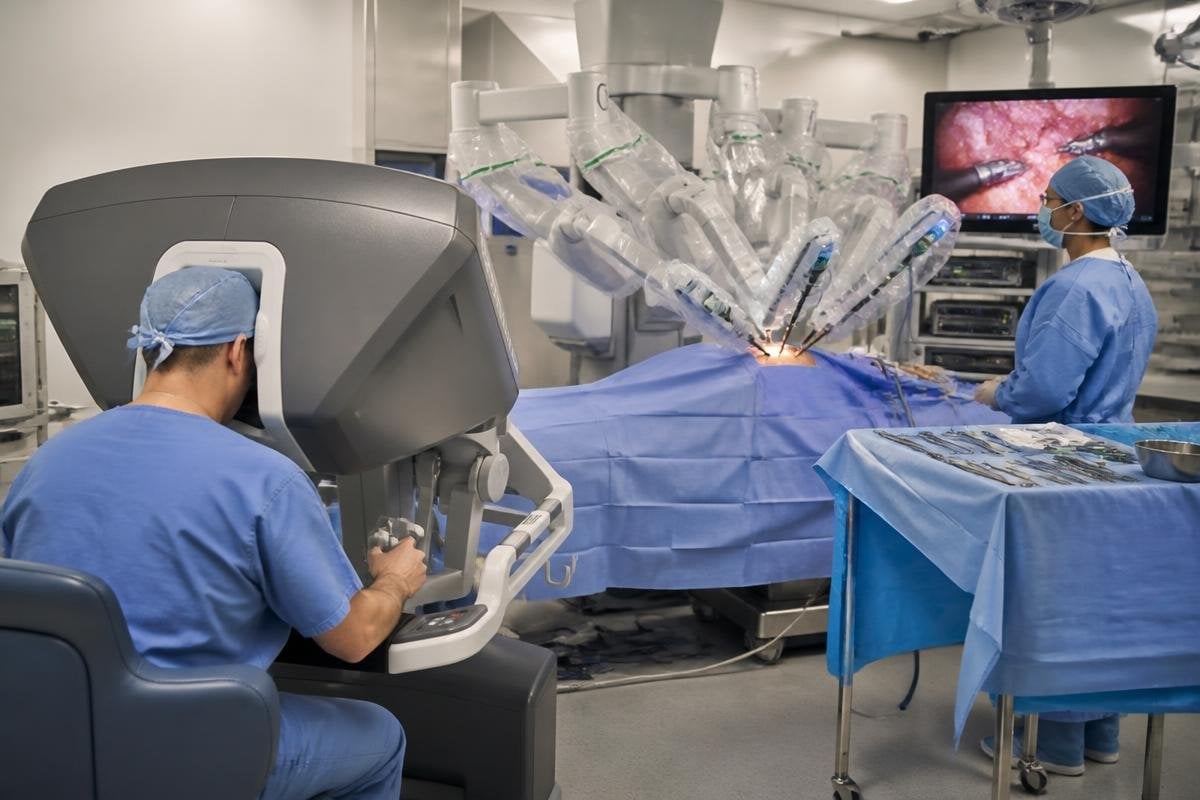
Robotic surgery is moving toward better control, clearer imaging, and less physical strain for surgeons. The hard question is whether each new system gives patients better results, or only adds cost and machinery to the operating room.
- The useful test: patient results, not robot features
- The main gain: steadier tool movement and better access in some procedures
- The open issue: proof across hospitals, surgeons, and patient groups
What robotic surgery can change
A surgical robot does not make medical decisions on its own. A surgeon controls the instruments from a console, while the system translates hand movements into smaller tool movements inside the patient’s body.
That setup can help with tasks that need steady motion. The surgeon may also see the operating area through a magnified camera, depending on the system and procedure. These features matter only when they improve a result that patients can feel, such as fewer complications, less pain, or a shorter recovery.
The machine itself is only one part of the operation. Training, patient selection, hospital processes, and the surgeon’s skill all affect what happens in the operating room. A robot can give a surgeon better control of an instrument, but it can’t fix a poor plan or weak follow-up care.
Where the next gains may come from
Future systems will likely focus on how instruments move, how images are shown, and how teams prepare for each operation. Better software could help a surgeon plan tool paths or mark anatomy on the camera view. Those functions need careful review because an error in a digital guide can affect a physical instrument.
Automation may also take on narrow tasks under direct surgical control. A system might hold a camera at a fixed angle or keep a tool within a planned boundary. That is very different from allowing a machine to choose a surgical action without approval.
This distinction matters for patients and hospital buyers. A feature can sound advanced while offering little value if it adds setup time, raises training needs, or has no clear link to patient results.
A surgical robot’s value depends on the procedure, hospital, and measured result, not its instrument list. Robot24.com reports on surgical robots give those claims a named system and date before the next section tests what remains unproven.
What remains unproven
The strongest claims about robotic surgery need results from more than a demonstration. A useful study should explain the procedure, the patient group, the comparison method, the surgeons involved, and the result being measured.
Cost also needs a close look. A hospital must account for the robot, instruments, service, staff training, room time, and changes to its existing workflow. A system that shortens one part of an operation may still cost more if setup and maintenance take longer.
Patient safety needs plain reporting too. Buyers should ask how the system handles a software fault, a camera failure, loss of power, or a tool that stops moving. They should also ask what the surgeon can do by hand if the robot has to leave the procedure.
I’d judge a robotic surgery system by patient outcomes and failure handling before its camera resolution or software list.
A practical check for new systems
Use these questions when a hospital, surgeon, or manufacturer presents a new robotic surgery system:
- Name the procedure. Ask where the system has been used and for which patients.
- Ask for the comparison. Find out what results were seen with the usual surgical method.
- Check the outcome. Look for measures such as complications, readmissions, recovery time, and repeat procedures.
- Price the full setup. Include instruments, service, training, room time, and staff changes.
- Test the fallback plan. Ask what happens after a software, power, camera, or tool fault.
- Separate control from autonomy. Find out which actions the surgeon approves and which the system performs on its own.
That last point will shape public trust. Patients may accept limited automation when the surgeon remains in control and the system’s boundaries are clear. They have good reason to ask harder questions when a company presents autonomy without procedure-specific safety results.
The next useful milestone is not a robot with more features. It is a published comparison showing which patient group benefits, by how much, and at what full cost.
